by Editorial Team · 2026-09-20
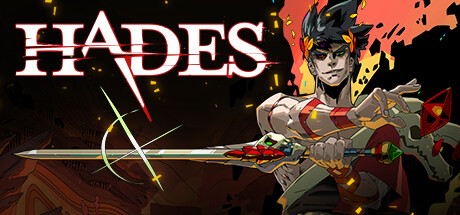
Supergiant Games built its reputation on stylish, narrative-driven action games, but with Hades the studio found the format that finally let every one of its strengths click into place at once. You play Zagreus, prince of the Underworld, attempting to fight his way up through procedurally arranged chambers of Greek myth and escape his father's domain. Die, and you don't restart from zero: you're dragged back to the House of Hades, a little stronger, with a little more of the story revealed, ready to go again.
That loop of dying, growing, and trying again is the entire design philosophy of Hades, and it is executed about as well as the genre has ever managed.
Gameplay and Combat
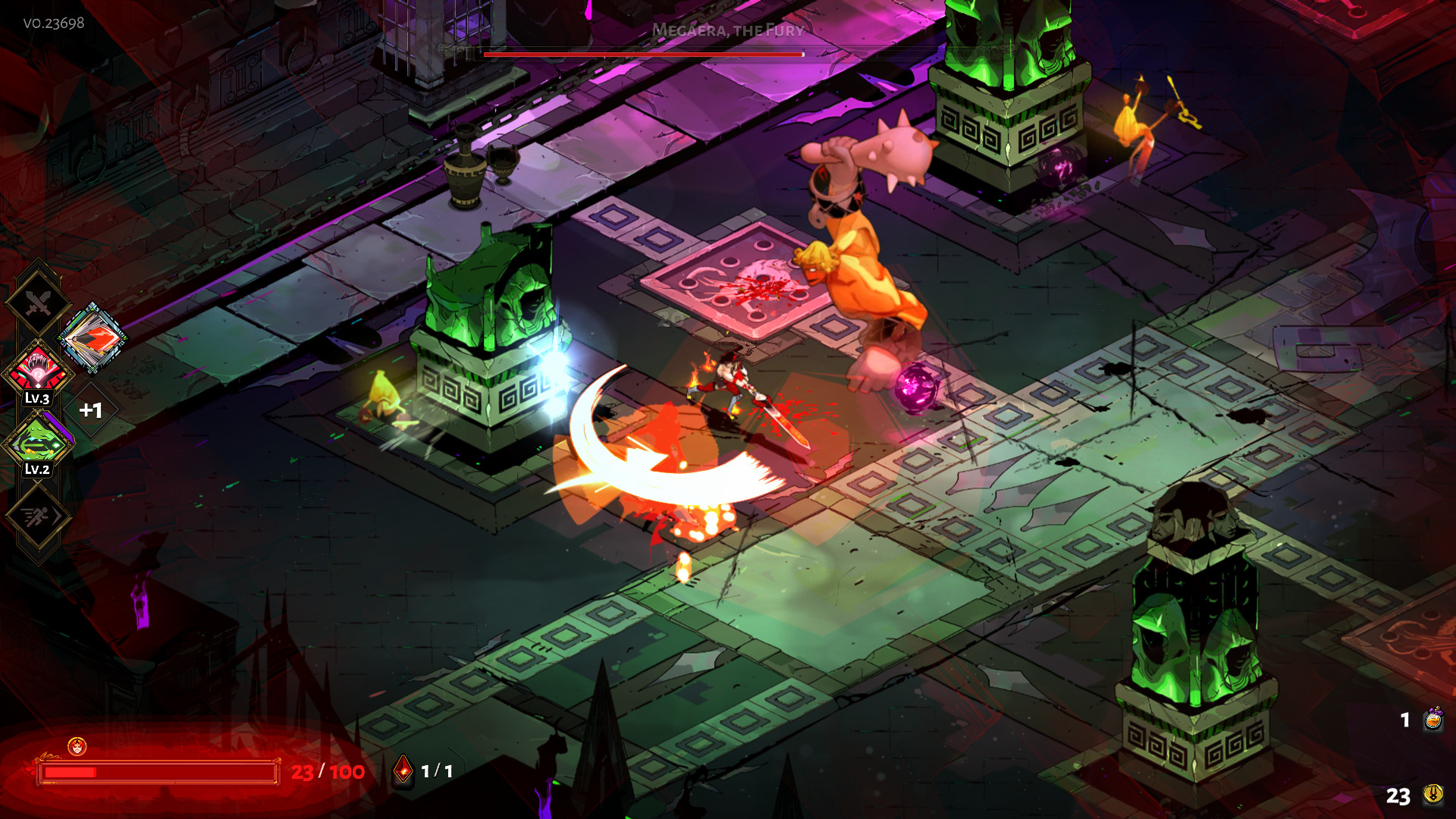
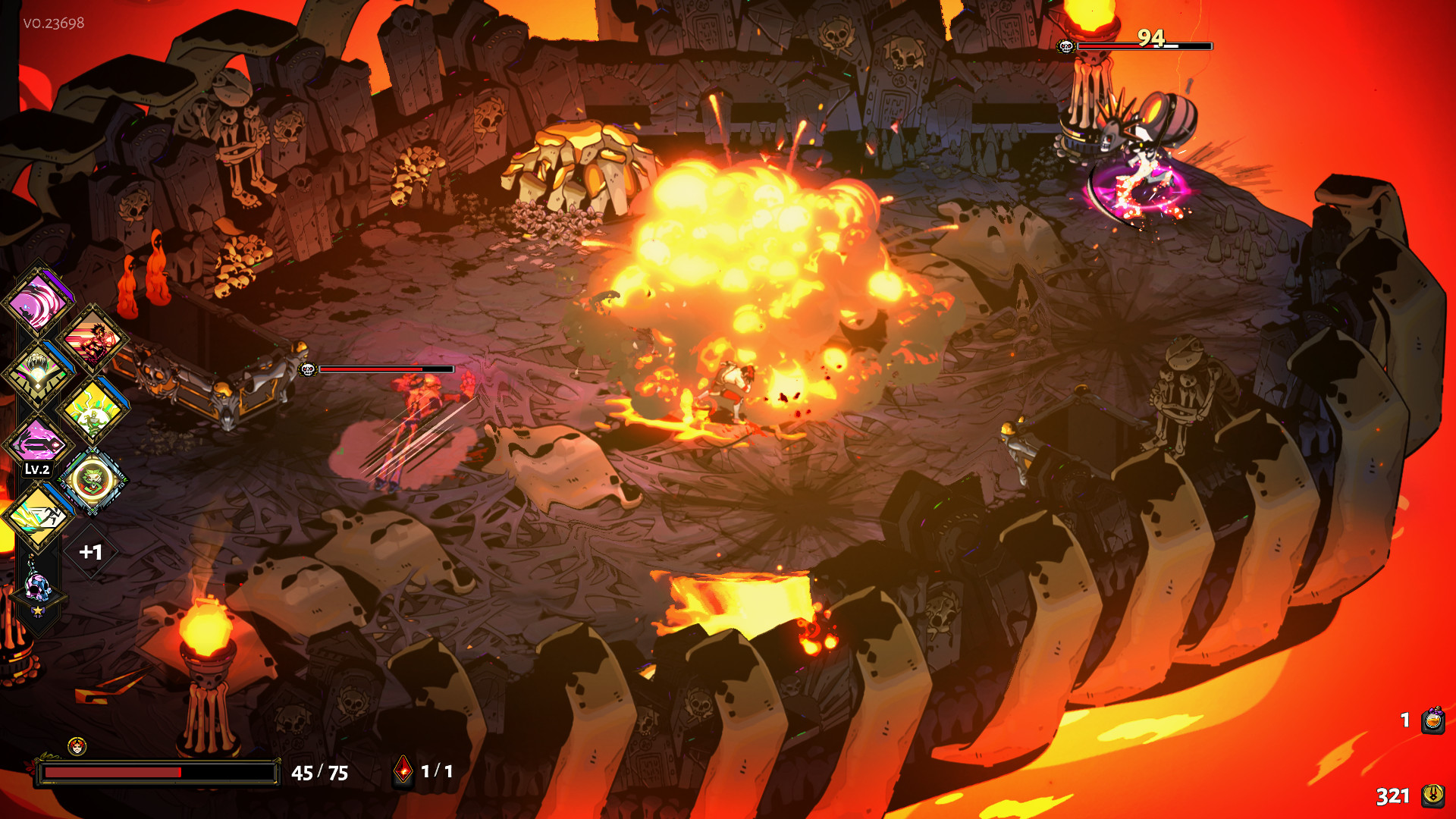
Combat is fast, weighty, and immediately satisfying, whether you're playing with a controller or mouse and keyboard. Zagreus has access to six distinct weapons, each with its own moveset and rhythm, and the run-defining "boon" system lets the Olympian gods grant temporary powers that combine in wildly different ways from run to run. A Zeus-Ares build that chains lightning through poisoned enemies plays nothing like a Poseidon-Demeter build built around knockback and crowd control, and the sheer number of viable combinations is what keeps hundreds of hours from feeling like repetition.
Crucially, failure is never a dead end. Permanent upgrades, unlocked through currencies you keep even after a run ends, mean a "bad" run still buys you a little more power, a little more story, or a little more gear for next time. That single design decision is what separates Hades from harsher roguelikes and makes it approachable for players who normally bounce off the genre's punishing resets.
Story and Narrative
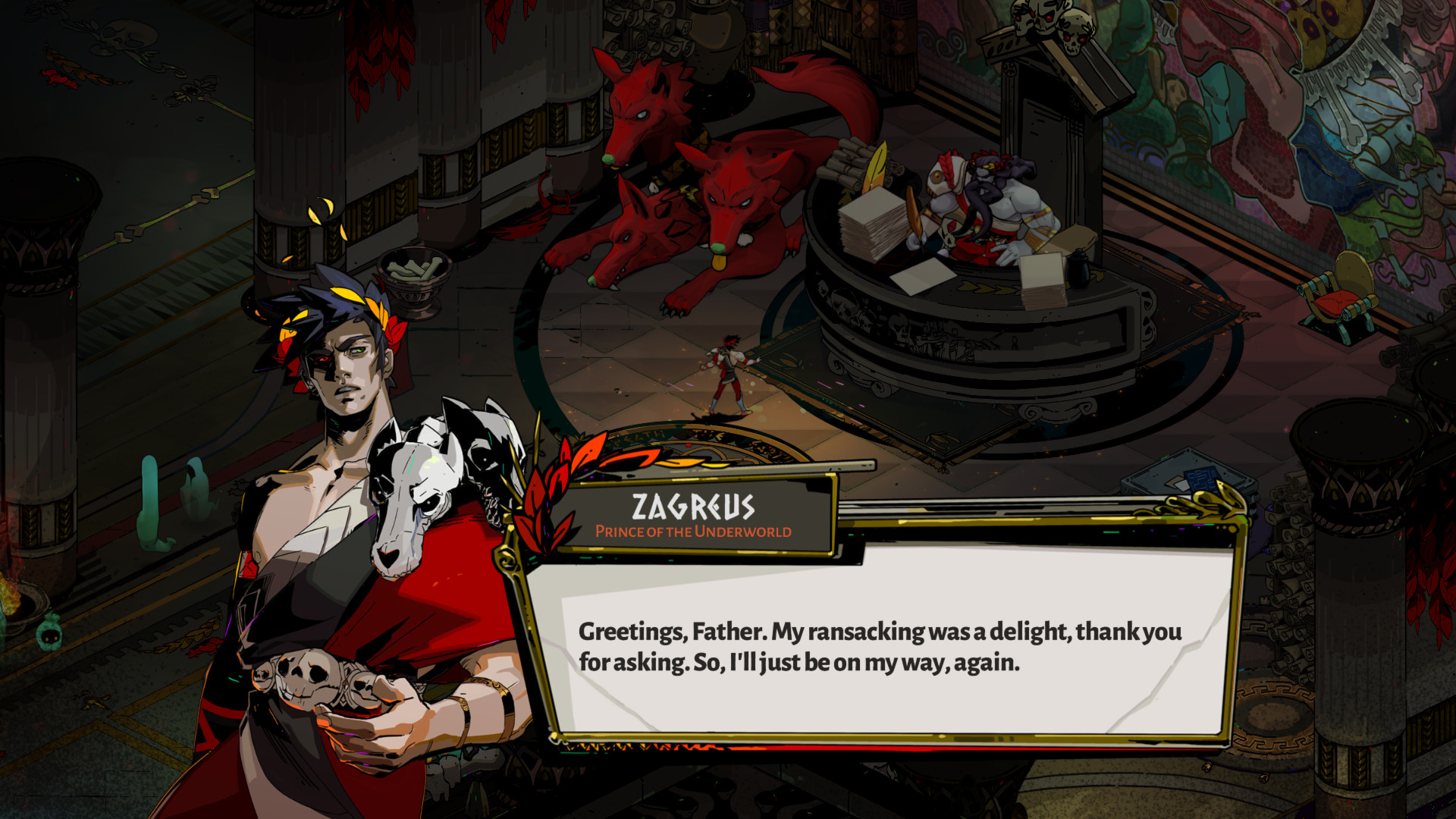
Where most roguelikes treat narrative as an afterthought, Hades makes the repetition itself the story. Every return to the House of Hades brings new fully-voiced dialogue, and the relationships between Zagreus, his father, and the wider Olympian family develop naturally across dozens of runs rather than through a single linear script. The reinterpretation of Greek mythology is playful and occasionally irreverent, but it clearly comes from genuine affection for the source material, and the characters are written with enough warmth and humor that players end up caring about escaping less for the mechanical reward and more to see what happens next.
A Minor Catch
The trade-off is that story beats and companion dialogue unlock in a somewhat randomized order tied to which characters happen to be present at the end of a given run. For most players this barely registers, but for completionists chasing every relationship and achievement, it can mean a frustrating stretch of runs where the "important" conversation simply doesn't trigger.
Art and Sound
Visually, Hades is a showcase for hand-painted character art layered over dynamic, readable combat arenas. Every god, every enemy, every room of the Underworld has a distinct, vivid personality, and the game reads clearly even in the chaos of a late-run boss fight. Darren Korb's soundtrack, blending hard rock with Mediterranean-inflected instrumentation, is one of the best in the genre, and the voice cast sells both the mythic gravity and the surprisingly sharp comedy of the writing.
Replayability
With multiple endings, weapon variants, difficulty modifiers that scale infinitely, and a huge matrix of boon synergies, Hades comfortably supports well over a hundred hours for players chasing full completion. It also runs remarkably well across a wide range of hardware, making it an easy game to pick up in short bursts or lose an afternoon to.
Pros
- Combat that feels fluid and responsive, especially with a controller
- Permanent meta-progression means every failed run still moves you forward
- Hand-painted art direction and a driving, genre-blending soundtrack
- A huge, ever-shifting pool of boon combinations keeps builds fresh
- Fully voiced cast with genuinely good writing woven into the roguelike loop
- Runs smoothly on nearly any hardware, with no predatory monetization
Cons
- Story and character dialogue unlock semi-randomly, which can slow progress toward certain achievements
- Late-game grind for full completion can feel excessive without mods
- Core combat loop can start to feel repetitive for players not drawn to hack-and-slash structure
- Occasional pacing lulls between the flashier boon combinations
Summary
Hades earns its reputation as one of the defining roguelikes of its generation by refusing to treat any of its ingredients as filler. The combat is sharp, the progression is generous, the art and music are gorgeous, and the story turns the genre's central weakness, repetition, into its greatest strength. A handful of pacing quirks around dialogue unlocks and endgame grind are the only real blemishes on an otherwise essential experience. Whether you're a roguelike veteran or someone who has always bounced off the genre, Hades is worth the descent.
Editorial Team
The GameOfReview editorial team writes and curates reviews collaboratively, informed by hands-on testing and community feedback.