by Game of Review Team · published 2026-11-17
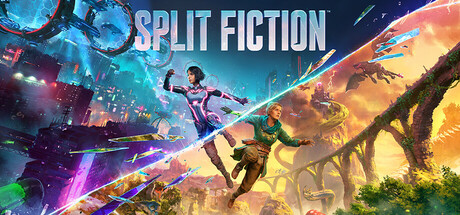
Mio and Zoe are two aspiring writers who get literally plugged into a machine that's supposed to publish their unfinished stories straight into readers' minds. Naturally, it glitches, and the two of them end up trapped inside a blender of their own fiction, bouncing between a cyberpunk sci-fi world and a swords-and-dragons fantasy one, forced to work together to escape. It's a goofy setup, and Hazelight knows it, treating the plot mostly as an excuse to throw you into one wildly different two-player scenario after another rather than as the main event. If you've played It Takes Two or A Way Out, you already know the studio's trick: hand both players something new to do almost every chapter, and keep the friction between them as the whole point.
Pros
- The asymmetric co-op design is the star of the show — almost every chapter hands each player a different ability or control scheme, and Steam reviewers have called it flat out the best couch co-op game they've played.
- A huge variety of mechanics across the roughly ten-hour campaign, from gravity-bending platforming to vehicle chases and rhythm-style sequences, keeps things from settling into a single groove for very long.
- Hidden side-stories (a kite race, a sausage-themed mini stage, a hand-drawn notebook detour) add genuine personality and are frequently singled out as some of the most memorable, surprising parts of the whole game.
- Visuals are a clear step up from It Takes Two, with sharper environments, a striking neon sci-fi palette, and noticeably better facial animation during the quieter story beats.
- The Friend's Pass lets one purchase cover both players — your co-op partner can join for free without owning the game, even across different platforms, which players and press alike have praised as Hazelight not "nickel-and-diming" its audience.
Cons
- The opening chapters are the game's weakest, with several reviewers describing the early pacing as slow and predictable before the game properly finds its footing a few hours in.
- By the back half, the platforming and boss encounters start recycling the same attack patterns under new visual skins, and the constant fantasy/sci-fi switching starts to feel a little samey rather than fresh.
- The writing is the recurring soft spot — both protagonists come across as bland, the dialogue leans cringeworthy at points, and the emotional beats don't land the way they did in A Way Out or It Takes Two.
- There's no difficulty assist or accessibility option for mismatched skill levels, so pairing with a less experienced partner can turn some sections frustrating rather than fun for either side.
- Mechanically it's a close sibling to It Takes Two, reusing a lot of that game's puzzle-platforming DNA, so anyone who bounced off that one is likely to hit the same walls here.
Performance & PC
On paper the requirements are reasonable for a co-op game built around constant visual spectacle: the minimum spec asks for a GTX 970 or RX 470 (4GB), a Core i5-6600K or Ryzen 5 2600X, and 16GB of RAM for 1080p at 30 FPS on Low settings, while the recommended tier (RTX 3070 or RX 6700 XT, Core i7-11700K or Ryzen 7 5800X) targets 1440p at 60 FPS on High. Expect to set aside a chunky 85GB of storage either way, which is a lot for a roughly ten-hour campaign. Split Fiction is Steam Deck Verified and runs as a native Steam build with no EA app login required, and Steam Cloud saves sync cleanly if you want to hop between a desktop and a Deck mid-playthrough. We didn't turn up widespread reports of crashes, freezing, or major stability problems in player or press feedback gathered for this review — for a game juggling this much visual variety and two simultaneous players, it has held up well since launch.
How it compares
A Way Out — Hazelight's previous co-op outing is the more grounded, story-first sibling; Split Fiction is bigger, weirder, and far more mechanically varied, but doesn't quite match A Way Out's tighter buddy-crime-drama focus.
Unravel Two — a much smaller, quieter two-player platformer; where Unravel Two is about tender, minimalist puzzle-platforming, Split Fiction is maximalist and constantly reinventing itself from chapter to chapter.
We Were Here Forever — a co-op puzzle series built entirely around communication between separated players; Split Fiction shares that same-screen teamwork DNA but wraps it in flashy platforming and set pieces rather than escape-room logic.
Summary
Split Fiction is Hazelight doing what Hazelight does best: using a flimsy premise as a launchpad for an hours-long magic trick of constantly changing co-op ideas. The writing is the weak link and the game runs out of genuinely new tricks before the credits roll, with the last few chapters leaning harder on spectacle than invention. But the sheer density of clever, playable-with-anyone moments — backed by a Friend's Pass that makes it nearly free for your co-op partner to join in, and by a technically solid PC release including full Steam Deck support — makes this an easy one to recommend to anyone with a second controller and a willing friend.


At a glance
- Price
- $49.99
- Released
- Mar 6, 2025
- Developer
- Hazelight Studios
Data: Steam · Updated Nov 17, 2026
More on Split Fiction
Similar games we reviewed


Game of Review Team
The Game of Review Team finds and drafts posts with the help of automation, then sets the rules and takes responsibility for what gets published. See our Review Methodology for how scores are put together.
🏆 Review of the Month
Write a review, get votes, win a game key
Share your honest review of any game, get votes from the community, and the top review each month wins its author a random game key worth up to $1.